what are the best supplements to take instead of statins
Us Pharm. 2017;42(ii):viii-xi.
Cardiovascular disease remains the leading crusade of mortality and morbidity in the United States, with coronary artery disease (CAD) being the number-ane cause of death.1 Dyslipidemia is a major contributor to the development of CAD and other forms of atherosclerosis; individuals with high total cholesterol levels (≥240 mg/dL) accept about twice the take chances for heart disease. Approximately 100 million adults in the U.S. accept total cholesterol levels >200 mg/dL (borderline high), and almost 74 one thousand thousand take high levels of low-density lipoprotein cholesterol (LDL-C).2,3 Adults anile >20 years should have their cholesterol measured at to the lowest degree in one case every v years.2
Handling Guidelines
There are many pharmacologic therapies to treat dyslipidemia, including HMG-CoA reductase inhibitors or statins, cholesterol absorption inhibitors, niacin, bile acrid sequestrants, fibrates, and omega-three fat acids; however, statins are the mainstay of treatment. In 2013, the American Higher of Cardiology (ACC) and the American Heart Association (AHA) released guidelines for the treatment of blood cholesterol.4 Rather than providing specific cholesterol targets, the current guidelines focus on intensity of statin handling in four unlike groups (Tabular array 1). This shift in handling can potentially increase the number of adults who are eligible to have statins by 12.eight million.5 The National Lipid Association's recommendations released in 2014 provide non–high-density lipoprotein cholesterol (non–HDL-C) goals, but like the ACC/AHA guidelines, treatment focuses on statins as the main agent of pick.6
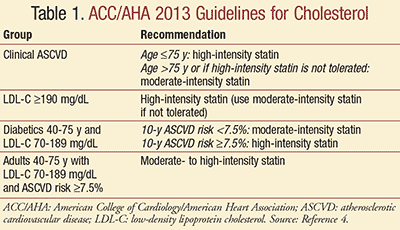
Despite this, about half of handling-eligible adults are not taking cholesterol-lowering drugs.vii This can be attributed to many reasons, including cost, perceived susceptibility to cardiovascular risks, and, nigh commonly, fear and concerns regarding safety and adverse effects.8,nine
OTC Supplements
Some of these patients may exist looking for alternative ways to lower their cholesterol and reduce their risk for cardiovascular disease. Near 34% of adults in the U.S. are using some course of complementary and alternative medicine (CAM).10 Cholesterol is included equally ane of the top 10 conditions for which adults are using CAM.eleven Fish oil and garlic, two supplements commonly used for the reduction of high cholesterol, were among the top 10 virtually often used natural products.10 Pharmacists are in an ideal position to educate patients nigh the use of OTC products for the direction of high cholesterol. They tin can aid patients make informed decisions based on the available data. The following is a give-and-take of the more popular OTC agents utilized in the management of dyslipidemia.
Garlic: Garlic has been used as a medicinal agent for thousands of years. Today, many people employ garlic for its purported cardiovascular benefits, such as lowering blood pressure and cholesterol. Garlic contains the amino acid alliin. When crushed, alliin is converted to allicin, a substance that inhibits cholesterol synthesis; all the same, clinical studies take demonstrated inconsistent results.12-15 In pooled analyses of studies, garlic was shown to improve triglyceride and total cholesterol levels, merely it had no effect on LDL-C or HDL-C.13,15 However, a recent meta-analysis found garlic to have benign furnishings on total serum cholesterol and LDL-C, lowering each by 17 ± 6 mg/dL and 9 ± 6 mg/dL, respectively.12 This issue was seen if garlic was taken for at least 2 months. Data suggest that the benefits of garlic on cholesterol may be short-term, showing no significant benefit subsequently 6 months.16,17
Garlic is associated with several adverse effects and drug interactions. The well-nigh mutual adverse effects include bad breath and body odor, upset stomach, and heartburn. Garlic has antiplatelet furnishings and tin increase a patient's run a risk for bleeding. Patients who are on anticoagulants and antiplatelet agents should be warned about this potential take chances.12-17
Niacin (Vitamin B3 ): Niacin is one of the most effective agents to enhance HDL-C levels; information technology can raise HDL-C by almost 35%.18 Niacin also reduces LDL-C levels by upwardly to 25% and triglycerides by 20% to 50%.18,19 This effect is dose-related, requiring 1 to 4 thou per day. In that location are a variety of niacin products available: immediate-release, long-acting (sustained-, controlled-, or timed-release), and extended-release. The first ii products are available OTC, while the extended-release products require a prescription. There is too a no-flush conception available OTC; however, the active ingredient is not niacin but inositol hexaniacinate, which has been shown to be ineffective as a lipid-lowering amanuensis.xx Nicotinamide (niacinamide) should not be used in place of niacin considering it does not effectively lower cholesterol or triglyceride levels.
Niacin is associated with several side effects. It tin cause hyperglycemia and worsen A1C command, but these increases are oftentimes clinically insignificant or readily treatable.twenty Doses upwards to 2,000 mg/day have been well tolerated in diabetic patients with piffling increase in fasting plasma glucose.xviii,21 Other reported agin effects include hyperuricemia, nausea, airsickness, diarrhea, and hypotension. Hepatotoxicity and flushing are likewise associated with its apply, but these effects are dependent on the formulation. OTC long-acting formulations should never exist recommended considering they are associated with hepatotoxicity, axiomatic by abnormal hepatic enzymes and, in astringent cases, jaundice.18
Niacin-induced flushing is a major barrier to its use; this effect limits niacin's utilization and achievement of therapeutic dosing. Virtually patients volition experience flushing, which is frequently more intense with the start of therapy, just usually subsides with continued employ. Patients taking immediate-release niacin should exist told to gradually increase the dose, take it with meals, and pretreat with aspirin to help minimize the occurrence of flushing.21
Omega-iii Fatty Acids/Fish Oils: Omega-3 fatty acids are the nearly ofttimes used natural production among adults, with consumption increasing well-nigh 10-fold this past decade.ten,22 Omega-three fatty acids include alpha-linolenic acid (ALA), eicosapentaenoic acrid (EPA), and docosahexaenoic acid (DHA). The about studied forms of omega-3 fatty acids are EPA and DHA. They have shown to be effective in lowering serum triglycerides upward to fifty%; even so, DHA tin raise LDL-C and HDL-C.23
There are over 400 OTC products currently marketed as omega-iii fish oil dietary supplements.24 These products not only incorporate EPA and DHA, just may as well include saturated fats, fatty-soluble vitamins, and cholesterol.25 Fish oil supplements vary in their EPA and DHA concentrations, ranging anywhere from 20% to >lxxx%. The AHA recommends ii to iv m per day of EPA plus DHA to lower triglycerides; if patients crave more than 3 1000 they should exist under a doctor'due south supervision.26 On average, patients would need to take 11.2 servings per day (1 to 3 capsules per serving) to attain this higher recommended dose.23 Many patients will have difficulty with this loftier pill burden; they should speak with their healthcare providers almost a prescription omega-three product.
Overall, these products are generally well tolerated. The most common adverse effects include stomach upset, diarrhea, and reflux. Many patients volition mutter about a "fishy" gustation, particularly if they are taking higher doses. Advising them to take enteric-coated formulations or freezing the capsules may aid reduce this. Some other result associated with omega-iii supplement use is excessive bleeding. Patients on anticoagulants or antiplatelet agents should use omega-3 fatty acids cautiously.21-25
Ruby Yeast Rice (RYR): RYR is produced by culturing a yeast, Monascus purpureus, on white rice. Chinese culture has used this agent every bit a nutrient preservative and nutrient colorant, and to brand rice wine.27 This fermented production contains a group of compounds called monacolins, substances that inhibit cholesterol synthesis via HMG-CoA reductase. One of the produced monacolins, monacolin Yard, is an analogue of the FDA-approved medication lovastatin. Clinical trials have demonstrated significant reductions in total cholesterol, LDL-C, and triglycerides and increases in HDL-C.19,20,27,28 However, the FDA has adamant that any product that contains more than than a trace corporeality of monacolin K cannot be sold legally as a dietary supplement.29
There are many OTC preparations containing RYR; information technology is unknown whether these agents have any cholesterol-lowering effects. To avoid existence considered a drug, manufacturers do not disclose the amount of monacolin in their products, if whatever. Another concern is that there is no standardization across manufacturers. If the product is fermented incorrectly, citrinin is produced, a toxic byproduct known to exist nephrotoxic. Studies take analyzed various RYR products and have demonstrated great variability in monacolin and citrinin contents.27,28,30 Some products, if ingested accordingly with the daily recommended dose, would provide the equivalent of lovastatin 20.v mg daily.27 This tin can exist a business organisation, specially if patients are already on a statin or on medications that may potentially increase the risk of muscle-related side furnishings. These products should not be recommended until improved oversight by the FDA and standardization of products have been implemented to ensure equivalence of agile ingredient contents and limitation of harmful byproducts.
Soluble Fiber: The use of soluble fibers, such as oats, psyllium, pectin, and guar gum, have been associated with lowering full cholesterol and LDL-C. Psyllium husk fiber appears to be one of the most effective soluble fibers with the to the lowest degree adverse effects.31 Consuming 7 to x g of psyllium per day demonstrated a reduction in total cholesterol levels past four% to 15% and LDL-C levels by half-dozen% to 18%.31,32 Although almost individuals will crave a larger reduction than what fiber monotherapy can provide, it is probably best when used in combination with other therapies.
The recommended amount of daily dietary fiber intake is 25 to 38 g per twenty-four hour period; virtually people are only consuming about half that amount.33,34 Examples of high-cobweb foods include whole grains, oats, fruits, and vegetables. Cobweb supplements may be helpful to those patients who are having difficulties in achieving this daily goal. Pharmacists demand to ensure that they are recommending fiber supplements containing a soluble viscous, gel-forming fiber (psyllium), although at that place are some data to indicate that inulin may be beneficial in reducing cholesterol levels.35,36
Agin furnishings associated with fiber supplements include gastrointestinal upset, bloating, diarrhea, constipation, and flatulence. Fiber should be increased gradually and taken with plenty of water. Patients should too be told to separate cobweb supplements from other medications by at to the lowest degree 2 hours to avert potential drug interactions.36
Conclusion
Dyslipidemia is a prevalent condition affecting over 100 million patients that can more than than double a person'due south adventure for the development of cardiovascular disease.i,ii Considering of this, many individuals are seeking alternative ways to lower their cholesterol. Pharmacists tin play a vital function in this process by educating patients and helping them make informed decisions regarding the use of the various available supplements.
Supplements that are supported by clinical evidence and guidelines include immediate-release niacin, omega-3 fatty acids, and soluble cobweb. Pharmacists should continue in listen, nevertheless, that these products are not regulated by the FDA and there may exist inconsistencies between dissimilar manufacturers and batches. Pharmacists should also avert recommending garlic, RYR, sustained-release niacin, no-flush niacin, and niacinamide due to lack of efficacy or documented adverse effects. A strong accent should be placed on the benefits associated with therapeutic lifestyle changes, such as maintaining a healthy weight, eating a low-fat, low-cholesterol, loftier-fiber diet, and exercising regularly. Patients should also be reminded to inform their healthcare providers of any supplements they may be taking.
PATIENT INFORMATION
What Is Cholesterol?
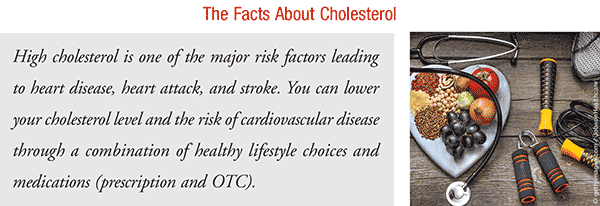
Cholesterol is a substance that your body needs to remain good for you. It comes from two sources: our bodies themselves and the food nosotros consume, such as meat, poultry, and dairy products. Too much cholesterol can increase your take a chance for heart illness.
What Is the Difference Between "Good" and "Bad" Cholesterol?
"Bad" cholesterol, also known every bit low-density lipoprotein (LDL), will build up in the inner walls of your arteries, making them narrow. This slows down blood flow. If this buildup of plaque breaks off, a clot forms that can completely block the flow of blood, causing a heart assault.
"Good" cholesterol, also known as loftier-density lipoprotein (HDL), helps protect us from heart attacks and strokes. This blazon carries the bad cholesterol away from the arteries.
What Are "Normal" Cholesterol Numbers?
Everyone aged xx years and older should have his or her cholesterol levels checked at to the lowest degree once every 5 years. The blood exam should exist taken later on fasting for 9 to 12 hours.
You should aim for a total cholesterol level of <200 mg/dL. Levels of 240 mg/dL or to a higher place are considered high. For LDL, lower levels are better, and the goal should be below 130 mg/dL, with <100 mg/dL being optimal. For HDL, higher numbers are amend. An HDL level <40 mg/dL is a major risk factor for developing heart disease. You want to aim for levels of lx mg/dL or better to help lower this risk.
How Tin I Meliorate my Cholesterol?
Eating healthy foods, maintaining a healthy weight, and staying physically active are all ways to help improve your cholesterol.
What Foods Should I Eat? What Foods Should I Avoid?
Maintaining a salubrious diet can aid lower your cholesterol. Recommended foods include fruits and vegetables; whole grain foods; fat-free, 1%, or depression-fat milk products; poultry without peel and lean meats; fatty fish such as salmon, trout, albacore tuna, and sardines; and unsalted nuts, seeds, and legumes.
A nutrition high in cholesterol, saturated fats, and trans fats should be avoided. This includes high-sodium foods; sweetened or sugary beverages; red, fatty, or processed meats; full-fat dairy products; baked goods with saturated and trans fats (e.g., cakes, cookies); solid fats or fried foods; and hydrogenated and saturated oils.
Tin Supplements Help?
There are a few things you tin have to help y'all lower your cholesterol, but you should speak with a healthcare provider before starting. Supplements that may have some do good include immediate-release niacin, omega-3 fatty acids/fish oil, and soluble fibers (psyllium). Supplements that should exist avoided include red yeast rice, garlic, sustained-release niacin, no flush niacin, and niacinamide. These supplements have no data to support their use in lowering cholesterol levels or take been associated with liver damage.
Remember, if y'all have Questions, Consult Your Chemist.
REFERENCES
ane. Centers for Disease Command and Prevention. Heart affliction facts. August x, 2015. www.cdc.gov/heartdisease/facts.htm. Accessed January eight, 2017.
2. Mozaffarian D, Benjamin EJ, Go AS, et al. Heart disease and stroke statistics—2015 update. Circulation. December 17, 2014. http://circ.ahajournals.org/content/early/2014/12/xviii/CIR.0000000000000152. Accessed January 8, 2017.
3. National Heart, Lung, and Claret Establish. High claret cholesterol: what you demand to know. June 2005. www.nhlbi.nih.gov/wellness/resources/heart/heart-cholesterol-hbc-what-html. Accessed January viii, 2017.
4. Stone NJ, Robinson J, Lichtenstein AH, et al. 2013 ACC/AHA guideline on the treatment of blood cholesterol to reduce atherosclerotic cardiovascular risk in adults. Circulation. November 12, 2013. http://circ.ahajournals.org/content/early on/2013/xi/xi/01.cir.0000437738.63853.7a. Accessed January 8, 2017.
5. Pencina MJ, Navar-Boggan AM, D'Agostino RB, et al. Application of new cholesterol guidelines to a population-based sample. Northward Engl J Med. 2014;370(15):1422-1431.
six. Jacobson TA, Ito MK, Maki KC, et al. National lipid clan recommendations for patient-centered management of dyslipidemia: part 1—full report. J Clin Lipidol. 2015;9(2):129-169.
7. Mercado C, DeSimone AK, Odom Eastward, et al. Prevalence of cholesterol treatment eligibility and medication use amidst adults—United States, 2005-2012. MMWR Morb Mortal Wkly Rep. 2015;64(47):1305-1311.
8. Vicki F, Sinclair F, Wang H, et al. Patients' perspectives on nonadherence to statin therapy: a focus-group study. Perm J. 2010;14(one):iv-ten.
9. Chee YJ, Chan HH, Tan NC. Understanding patients' perspective of statin therapy: can we design a better arroyo to the management of dyslipidaemia? A literature review. Singapore Med J. 2014;55(8):416-421.
x. Clarke TC, Black LI, Stussman BJ, et al. Trends in the use of complementary health approaches among adults: United States, 2002–2012. Natl Wellness Stat Rep. 2015;(79):1-16.
11. National Centre for Complementary and Integrative Wellness (NCCIH). The use of complementary and alternative medicine in the United States. December 22, 2011. https://nccih.nih.gov/research/statistics/2007/camsurvey_fs1.htm. Accessed January 8, 2017.
12. Ried K, Toben C, Fakler P. Event of garlic on serum lipids: an updated meta-analysis. Nutr Rev. 2013;71(v):282-299.
13. Zeng T, Guo FF, Zhang CL, et al. A meta-analysis of randomized, double-blind, placebo-controlled trials for the furnishings of garlic on serum lipid profiles. J Sci Nutrient Agric. 2012;92(nine):1892-1902.
xiv. Stevinson C, Pittler MH, Ernst E. Garlic for treating hypercholesterolemia. A meta-analysis of randomized clinical trials. Ann Intern Med. 2000;133(6):420-429.
15. Reinhart KM, Talati R, White CM, Coleman CI. The impact of garlic on lipid parameters: a systematic review and meta-analysis. Nutr Res Rev. 2009;22(one):39-48.
xvi. Mulrow C, Lawrence 5, Ackermann R, et al. Garlic: furnishings on cardiovascular risks and affliction, protective furnishings against cancer, and clinical agin effects. Evid Rep Technol Assess (Summ). 2000;(twenty):1-four.
17. Ackermann RT, Mulrow CD, Ramirez G, et al. Garlic shows promise for improving some cardio-vascular take chances factors. Arch Intern Med. 2001;161(6):813-824.
18. Chapman MJ, Redfern JS, McGovern ME, Giral P. Niacin and fibrates in atherogenic dyslipidemia: pharmacotherapy to reduce cardiovascular risk. Pharmacol Ther. 2010;126(3):314-345.
nineteen. Houston K. The role of nutraceutical supplements in the treatment of dyslipidemia. J Clin Hypertens. 2012;xiv(2):121-132.
20. Houston MC, Fazio Due south, Chilton FH, et al. Nonpharmacologic handling of dyslipidemia. Prog Cardiovasc Dis. 2009;52(2):61-94.
21. Guyton JR, Trophy HE. Safety considerations with niacin therapy. Am J Cardiol. 2007;99(6A):22C-31C.
22. Kantor ED, Rehm CD, Du 1000, et al. Trends in dietary supplement employ amongst U.s. adults from 1999-2012. JAMA. 2016;316(14):1464-1474.
23. Bradberry JC, Hilleman DE. Overview of omega-iii fatty acid therapies. P T. 2013;38(eleven):681-691.
24. Dietary Supplement Label Database. Omega-3 results. National Institutes of Health. https://dsld.nlm.nih.gov/dsld/rptQSearch.jsp?detail=omega-3&db=adsld. Accessed Jan 8, 2017.
25. Fialkow J. Omega-3 fatty acid formulations in cardiovascular illness: dietary supplements are not substitutes for prescription products. Am J Cardiovasc Drugs. 2016;16:229-239.
26. Miller Thousand, Rock NJ, Ballantyne C, et al. Triglycerides and cardiovascular disease: a scientific argument from the American Heart Association. Apportionment. 2011;123(20):2292-2333.
27. Childress L, Gay A, Zargar A, Ito MK. Review of ruddy yeast rice content and current Food and Drug Administration oversight. J Clin Lipidol. 2013;vii(2):117-122.
28. Gordon RY, Cooperman T, Obermeyer W, Becker DJ. Marked variability of monacolin levels in commercial ruby yeast rice products: buyer beware! Arch Intern Med. 2010;170(19):1722-1727.
29. NCCIH. Loftier cholesterol and complementary health practices: what the science says. Feb 6, 2013. https://nccih.nih.gov/health/providers/digest/cholesterol-science. Accessed January 8, 2017.
xxx. Heber D, Lembertas A, Lu QY, et al. An analysis of nine proprietary Chinese red yeast rice dietary supplements: implications of variability in chemical contour and contents. J Altern Complement Med. 2001;7(2):133-139.
31. Anderson JW, Davidson MH, Blonde L, et al. Long-term cholesterol-lowering effects of psyllium as an offshoot to diet therapy in the treatment of hypercholesterolemia. Am J Clin Nutr. 2000;71(6):1433-1438.
32. Anderson JW, Allgood LD, Lawrence A, et al. Cholesterol-lowering effects of psyllium intake adjunctive to diet therapy in men and women with hypercholesterolemia: meta-analysis of 8 controlled trials. Am J Clin Nutr. 2000;71(two):472-479.
33. U.Southward. Section of Health and Human being Services and U.Southward. Department of Agriculture. Dietary guidelines for Americans 2015-2020. 8th ed. December 2015. http://wellness.gov/dietaryguidelines/2015/guidelines/. Accessed Jan 8, 2017.
34. McGill CR, Fulgoni VL, Devareddy L. Ten-year trends in fiber and whole grain intakes and food sources for the United states of america population: National Health and Nutrition Examination Survey 2001–2010. Nutrients. 2015;7(2):1119-1130.
35. Guo Z, Liu XM, Zhang QX, et al. Furnishings of inulin on the plasma lipid profile of normolipidemic and hyperlipidemic subjects: a meta-analysis of randomized controlled trials. Clin Lipidol. 2012;7(2):215-222.
36. McRorie JW. Evidence-based approach to fiber supplements and clinically meaningful health benefits, part ane: what to wait for and how to recommend an effective fiber therapy. Nutr Today. 2015;50(two):82-89.
To annotate on this commodity, contact rdavidson@uspharmacist.com.
Source: https://www.uspharmacist.com/article/otc-supplements-for-the-management-of-high-cholesterol
0 Response to "what are the best supplements to take instead of statins"
Postar um comentário